
Army likely to start using SAI for internal communications from April 1

The application supports end-to-end secure voice, text and video-calling services for Android platforms over the internet 
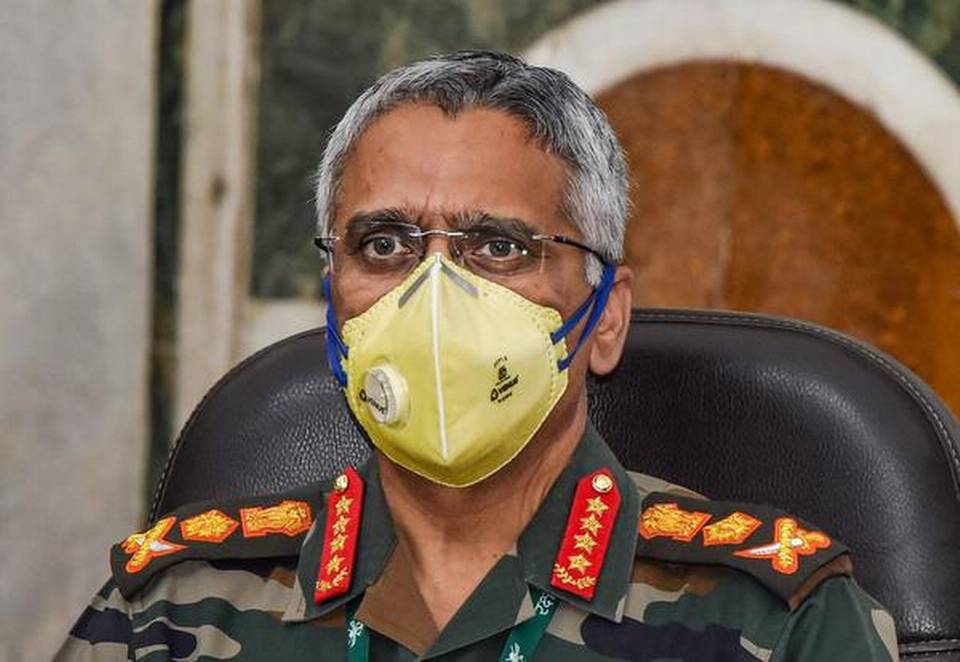


From April 1, the Indian Army is likely to start using SAI (Secure Application for Internet), a messaging platform, for internal communications, Army chief General M.M. Naravane said on Wednesday. 

He said the application, developed by Colonel Sai Shankar, is undergoing the process of getting cyber and security clearance and data testing. 

"One of our officers has developed a software application, which is the equivalent of WhatsApp.” 

"We plan to introduce that throughout the Indian Army. It is undergoing cyber clearance, security clearance and data testing. And maybe from April 1, we will only use that for our internal communications," Mr. Naravane said at a webinar organised by the Vivekananda International Foundation.

The application supports end-to-end secure voice, text and video-calling services for Android platforms over the internet. 

The model is similar to commercially available messaging applications such as WhatsApp, Telegram, SAMVAD and GIMS, and utilises the end-to-end encryption messaging protocol. SAI scores over these platforms in terms of security features with local in-house servers and coding, which can be tweaked as per requirements.

Comments

Popular posts from this blog

Explained: What is Army Aviation Corps, the youngest Corps of the Indian Army

A look at the Army Aviation Corps’ history and its relevance in modern day battlefields, including in Counter Insurgency and Counter Terrorism (CI-CT) operations. Representative Image The Army Aviation Corps (AAC), the youngest Corps of the Indian Army, celebrated its 35th Corps Day on November 1. We take a look at the arm that adds an air dimension to the Army’s capabilities, its history, and its relevance in modern day battlefields, including Counter Insurgency and Counter Terrorism (CI-CT) operations. The roots of Army Aviation Corps The origin of the AAC can be traced back to the raising of the Army Aviation wing of the Royal Air Force in India in 1942, and the subsequent formation of the first Indian Air Observation Post in August 1947. The Air Observation Post units primarily acted as artillery spotters – which are the elements that help the artillery in directing the fire and also giving air support to ground forces. In the wars of 1965 and 1971, the Air Observation Post helicop...

That time when India took half of Pakistan to make it pay for a motorcycle

In 1947, British officer Yahya Khan offered his colleague 1,000 rupees for his spiffy red motorcycle. His colleague, Sam Manekshaw, agreed. But before Khan could pay, he was off to what was going to become Pakistan. The British split its Indian colony, and things on the subcontinent have been pretty tense ever since. To top it all off, Yahya Khan didn't pay for the motorbike. But he would, even if it took almost 25 years. The Partition of India was much more than the splitting of the British Raj into two independent states. It was a catastrophic split that tore apart the country and created millions of refugees, cost millions of lives, and split the armed forces of the country in two, all based on religion. Violence erupted almost immediately between the two groups on such a large scale that much of it has never been forgotten or forgiven. Animosity continued between both sides for decades, and the two have fought war after war because of the myriad issues left unaddressed. By 1970...

Explained: India-US defence deals - BECA, LEMOA & COMCASA

At 2+2 meeting next week, the two countries will look to push intelligence sharing pact BECA . With key deals LEMOA and COMCASA already signed, what does it mean for defence, particularly in light of LAC standoff? India and US have signed the LEMOA in 2016, COMCASA in 2018 and BECA is scheduled for the third 2+2 ministerial meeting (on November 3rd) India and the US are preparing for the third 2+2 ministerial meeting between External Affairs Minister S Jaishankar and Defence Minister Rajnath Singh , and US Secretary of State Michael Pompeo and Defense Secretary Mark T Esper in New Delhi on October 26-27. Deputy Secretary of State Stephen E Biegun visited India last week to lay the groundwork for the high-level visits 2+2 in 2018. One of the items on the agenda will be the Basic Exchange and Cooperation Agreement (BECA) — a pact with deep military implications. In the last two meetings, agreements known as LEMOA and COMCASA were signed; now, with BECA, these have been dubbed the ...